Limbs parked over the roof
Overextended laterals hanging above shingles, gutters, or a pool screen enclosure aren't shade anymore — they're stored weight waiting on the next windstorm.
God's Country Tree Service LLC is a licensed and insured tree service based in DeLand, Florida, serving Volusia County since 2014. We take height and weight off storm-loaded canopies with proper reduction cuts — never topping — so your oaks keep their strength, their balance, and their shade.
A live oak doesn’t stop growing because the yard ran out of room — every Central Florida summer adds weight to limbs already parked over your roof.
Yes — in most DeLand yards an overgrown or lopsided canopy can be rebalanced with selective reduction and shaping cuts over one or two visits. We shorten overextended limbs back to strong laterals, even out the silhouette, and restore clearance over roofs and pool screen enclosures without stripping the tree bare.
Overextended laterals hanging above shingles, gutters, or a pool screen enclosure aren't shade anymore — they're stored weight waiting on the next windstorm.
One-sided growth or a limb lost to weather leaves the canopy loading the trunk unevenly. A lopsided tree levers itself harder with every gust.
When a canopy gets so dense that grass dies beneath it and wind can't pass through, the tree is catching every storm like a full sail.
The oak planted decades ago now reaches over two rooflines and a driveway. It doesn't need to go — it needs its size managed on purpose.
Crown reduction shortens limbs back to healthy lateral branches that take over the growth, preserving the tree's structure. Topping slices through the middle of limbs at an arbitrary height, leaving stubs that decay and sprout weak regrowth. One is arboriculture; the other slowly kills Florida oaks — which is why we refuse to top.
We turn down topping jobs — even when a customer asks for one. Topping kills DeLand’s live oaks slowly and makes them more dangerous in the meantime. On your walkthrough we’ll show you what a proper reduction takes off, and why the tree is safer and better-looking for it.
Crown thinning removes select interior branches so hurricane-force wind passes through the canopy instead of pushing against it like a sail. Paired with reduction, it takes weight off long limbs and lowers the leverage on the trunk — often the difference between shedding twigs and losing the whole tree.
Around DeLand, the trees that fail in storms are rarely the small ones. They’re the broad, heavy live oaks and laurel oaks whose root plates sit in sandy Central Florida soil — soil that gives up its grip when a saturated canopy catches forty-mile-an-hour gusts. Reducing the crown before June does more for that tree than anything you can do to it in October.
Certified arborist judgment. Which limbs come back, which interior branches come out, and how much the tree can lose in one visit — decided by training, not by whatever the saw reaches.
Reduction, not amputation. Every cut lands at a lateral the tree can grow from, so the canopy stays alive, sealed, and structurally sound after we leave.
One crew, whole job. Climbing, shaping, chipping, and same-day hauling from the same Volusia County company — no second contractor for the cleanup.
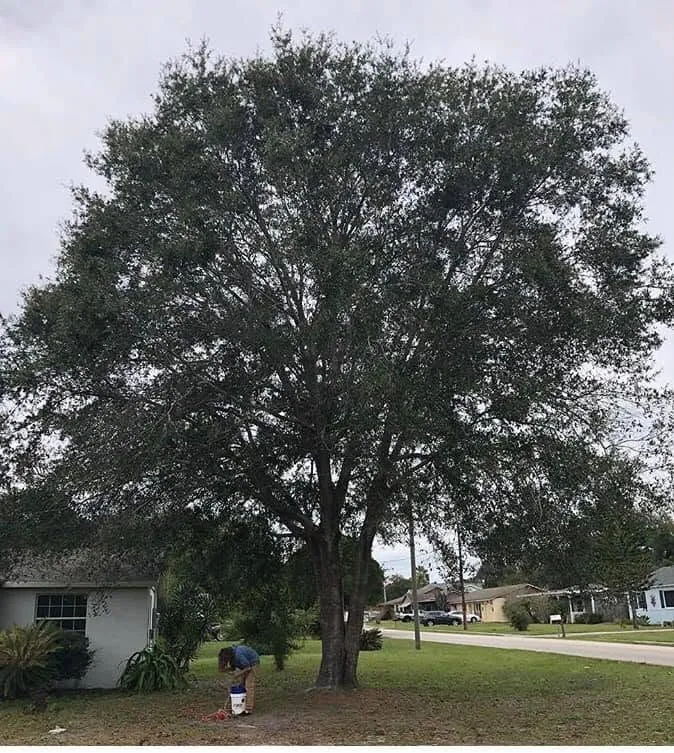
Every crown reduction we quote in DeLand starts with an assessment of the whole tree, then works the canopy zone by zone: height off the top, length off overextended laterals, thinning through the interior, and clearance lifted at the base. Chipping, hauling, and cleanup are built into the written estimate.
The highest leaders come down to strong laterals, lowering the canopy's center of gravity and the leverage wind gets on the trunk. This is where storm risk lives — and where topping does its worst damage when the wrong crew does it.
Overextended limbs get pulled back from rooflines, driveways, and property lines with reduction cuts, not stub cuts. The spread shrinks while every remaining limb keeps a live growing tip.
We remove select interior branches so wind and light pass through the crown instead of pushing against it. The living structure stays; the sail effect goes.
The lowest limbs are raised for clearance over pool screen enclosures, walkways, and sightlines — the finished tree looks lifted and intentional, like the vase-shaped canopies in our photos.
Crown reduction cost in DeLand depends on the tree's size, how much of the canopy needs work, and what sits underneath it — small ornamentals run a few hundred dollars, while large oaks over homes cost more. You get a free written estimate within 24 hours with the full scope spelled out.
A light rebalancing of an ornamental and a full four-zone reduction of an 80-foot oak are different jobs. Height, spread, and how far the shape has drifted drive the crew time.
Open lawn, or roof, pool screen enclosure, and fence? Limbs over targets get roped and lowered piece by piece, which takes longer than letting brush fall into grass.
Storm-stressed, lopsided, or previously topped trees need slower, more deliberate cuts. That care shows up honestly in the written quote — never as a surprise afterward.
If you're typing crown reduction near me in DeLand, these photos are the nearby answer: mature oaks brought back to clean, balanced silhouettes with the yard spotless afterward. We work within about 50 miles of DeLand — Deltona, Orange City, DeBary, and Lake Helen included — so this crew is your crew.
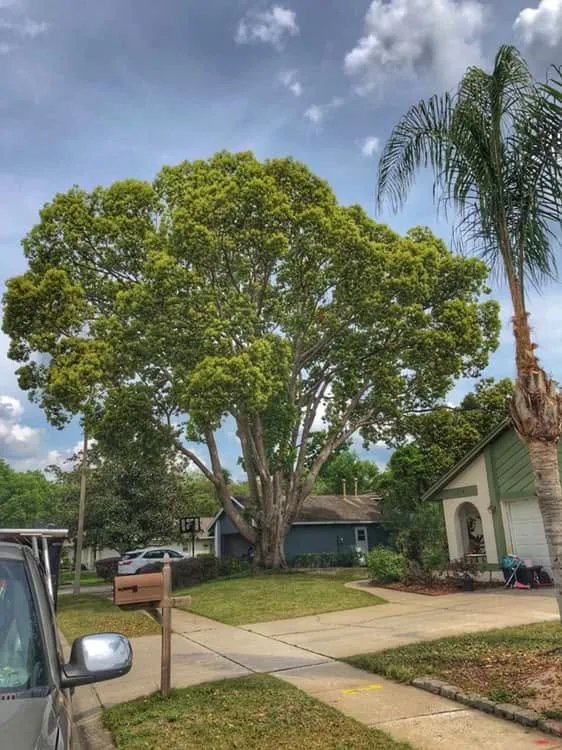
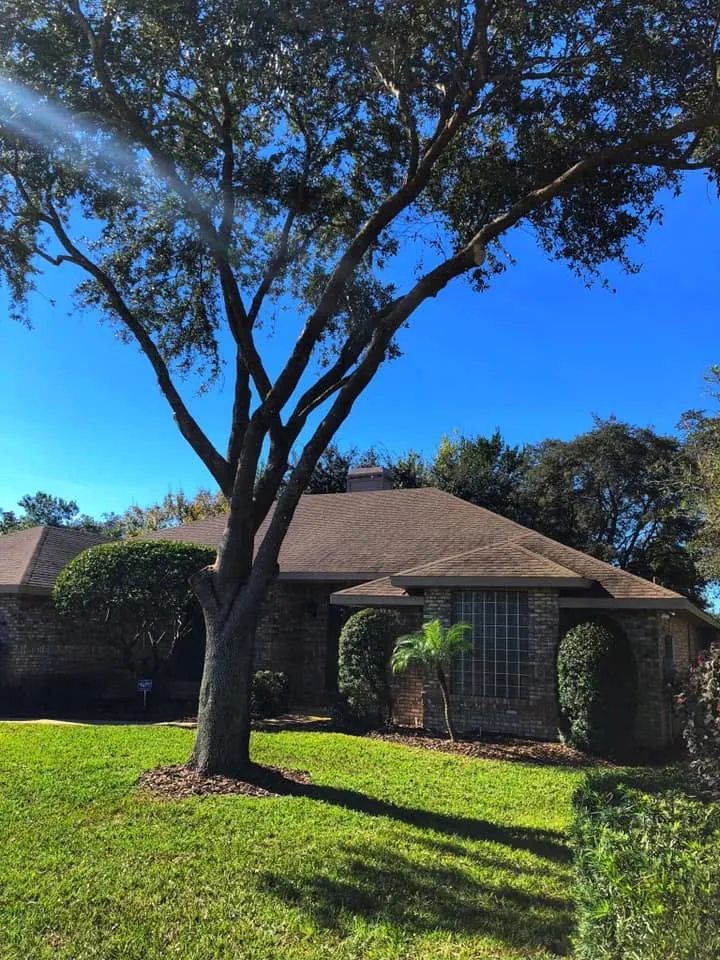
Almost always the same things: whether reduction hurts the tree, how much can come off, the best season, how long the shape lasts, and what happens to the brush. Straight answers below — and if yours isn't here, put it in the estimate form and we'll answer within 24 hours.
Not when it's done with proper reduction cuts. Every limb is shortened back to a living lateral branch that takes over growth, so the oak seals its wounds and keeps a full working canopy. What harms live oaks is topping — indiscriminate cuts that leave decaying stubs. That's the practice we refuse, and the reason DeLand homeowners call us to fix other crews' work.
Less than most people expect — a modest fraction of the live canopy per visit, because a tree feeds itself through its leaves. If a canopy is badly overgrown, we'd rather shape it in stages a season or two apart than stress it with one aggressive cut. Your estimate spells out exactly what comes off and why.
The smartest window is before hurricane season peaks — get the weight and sail area off in spring or early summer, and the tree rides out the storms lighter. Cooler months are gentler for heavy reductions on stressed trees. We shape trees across Volusia County year-round and will tell you honestly if a job is better timed for a different season.
A properly reduced crown holds its size and balance for several years, because growth continues from the laterals we cut to instead of exploding from stubs. Florida sun and rain keep trees moving, so most DeLand homeowners put shaping on a cycle of every few years — far cheaper than the emergency call a neglected canopy eventually makes.
Often, yes. Restoration shaping selects the strongest of the sprouts a topping cut produced, trains them into new leaders, and removes the weak, crowded regrowth around them. It usually takes more than one visit spread over a couple of seasons, but many topped trees can be brought back to a safe, natural structure instead of being removed.
Yes — cleanup is part of the job, not an add-on. Brush goes through the chipper, wood goes on the truck, and the lawn gets raked before we leave. Most of our shaping quotes include chipping and hauling so the price you approve in writing is the price you pay.
That's one of the most common calls we get in DeLand. Limbs over a screen enclosure are roped and lowered in controlled sections, so nothing free-falls onto the screen. Between climbers and a compact loader, we can rebalance a canopy in a fenced backyard without damaging the enclosure, the deck, or the landscaping around the pool.
Shaping one tree usually surfaces work on its neighbors: routine trimming to hold the new silhouette, arborist pruning for structure and health, and removal for the tree a reduction can no longer save. All three come from the same God's Country crew, usually quoted in the same free estimate.

Seasonal and routine trimming for trees of every size.
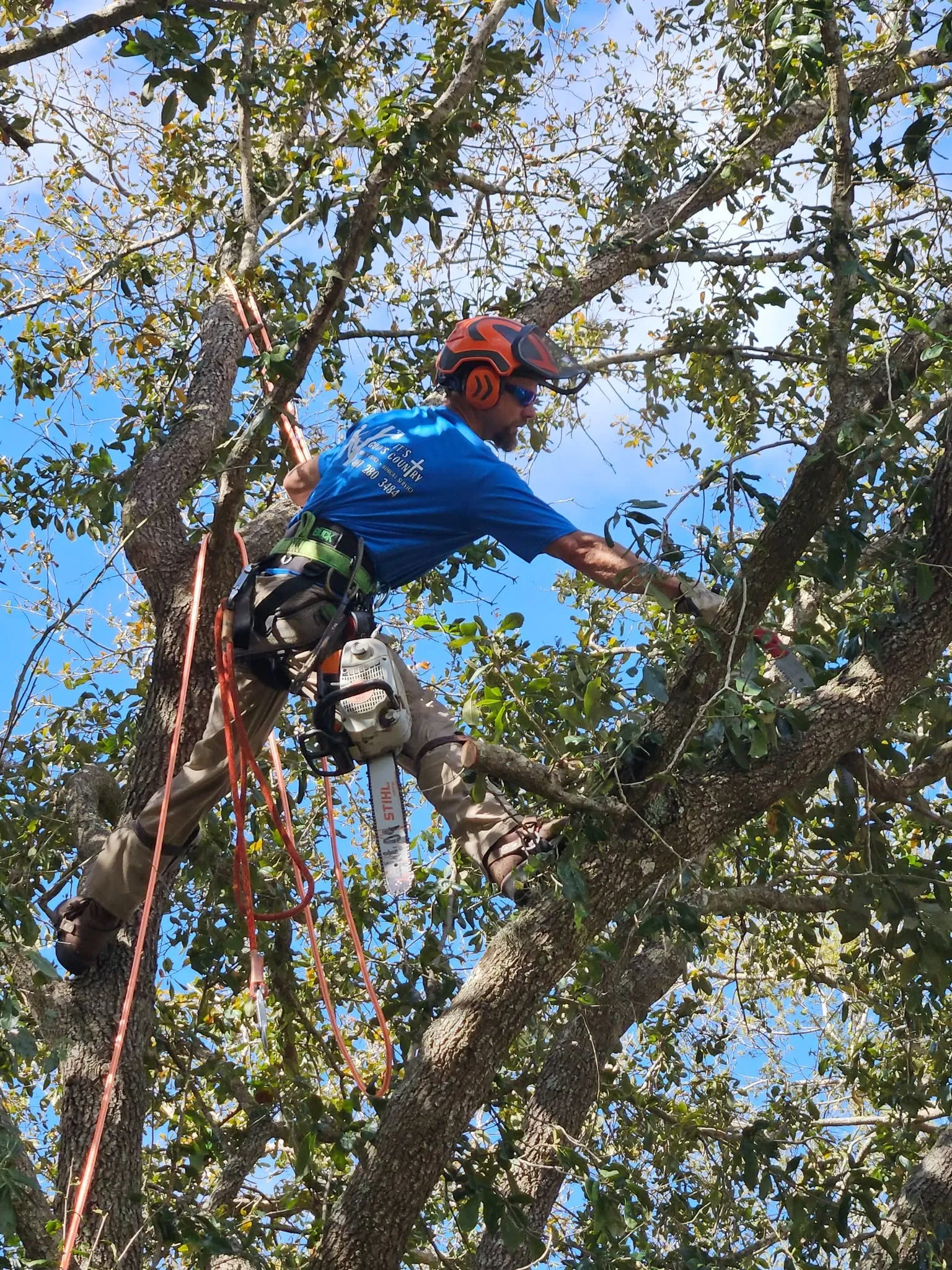
Precision pruning that improves structure, health, and appearance.
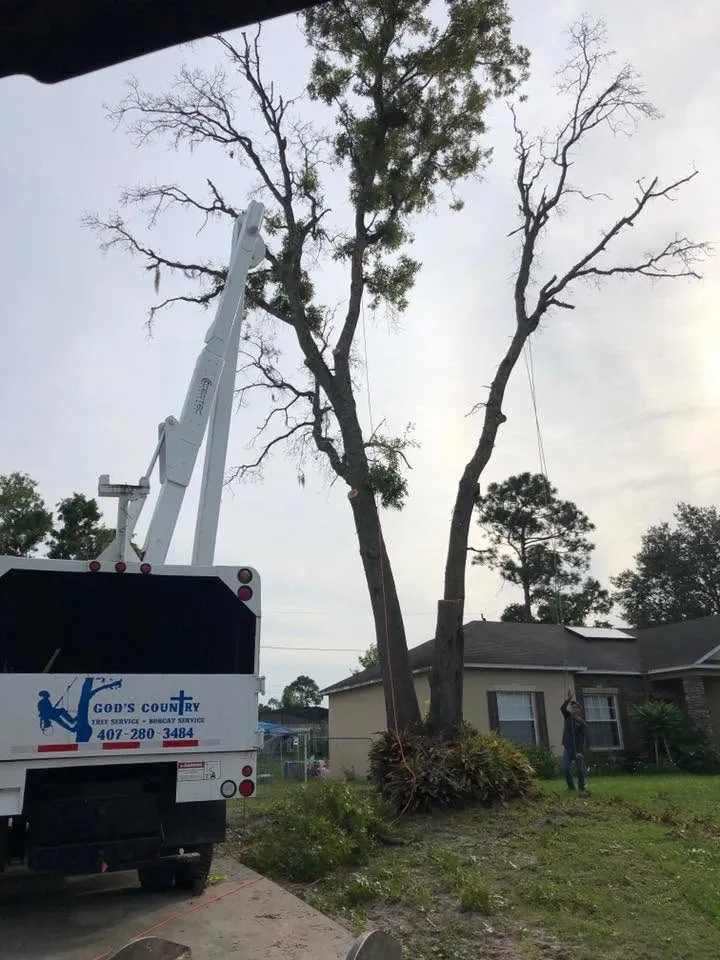
Specialized removal of dead and diseased trees threatening your property.
Tell us about the overgrown oak, the lopsided camphor, or the limbs creeping over the pool screen. God's Country Tree Service LLC will walk the property, show you exactly what a proper reduction takes off, and put a straight price in writing — usually within 24 hours.
Last Updated: July 2026