Fungus at the base
Mushrooms, shelf conks, or soft bark ringing the trunk mean the roots or lower trunk are decaying. By the time fungus fruits on the outside, the rot inside is well ahead of it.
God's Country Tree Service LLC is a licensed and insured tree service based in DeLand, Florida, removing dead, dying, and structurally compromised trees across Volusia County since 2014. Careful rigging around roofs and pool enclosures, photo documentation for your records, and free written estimates within 24 hours.
A dead or dangerous tree in DeLand usually announces itself: mushrooms or shelf fungus at the base, bare limbs at the top of the crown, hollow cavities, sliding bark, or a lean that wasn't there last year. One sign deserves a look; two or more mean the tree needs an assessment before hurricane season.
Mushrooms, shelf conks, or soft bark ringing the trunk mean the roots or lower trunk are decaying. By the time fungus fruits on the outside, the rot inside is well ahead of it.
Bare, leafless limbs at the very top while the lower canopy still leafs out is the classic decline signal in DeLand's live oaks — the tree is dying from the top down.
Woodpecker holes, carpenter ants, and cavities that swallow a fist mean the trunk is losing the solid wood that holds it up. Hollow trees fail without drama and without warning.
In sandy Central Florida soil, a root plate can lose its grip fast. A lean that appeared after a storm, or creeps a little further each season, is the tree letting go.
Slabs of bark sliding off and fine sawdust piling at the base point to borers and beetles — and in slash pines, beetle-kill can turn a green tree brittle within months.
Cracked unions, split leaders, and limbs hanging by fiber after a named storm rarely heal. Every next blow works the crack wider until whatever hangs over your roof lets go.
Dead trees are unpredictable in ways live ones aren't — brittle limbs snap without warning, hollow trunks won't hold a climber, and decayed wood tears instead of hinging on the cut. Dangerous tree removal means slower rigging, more machine work, and a crew that reads decay before trusting it with weight.
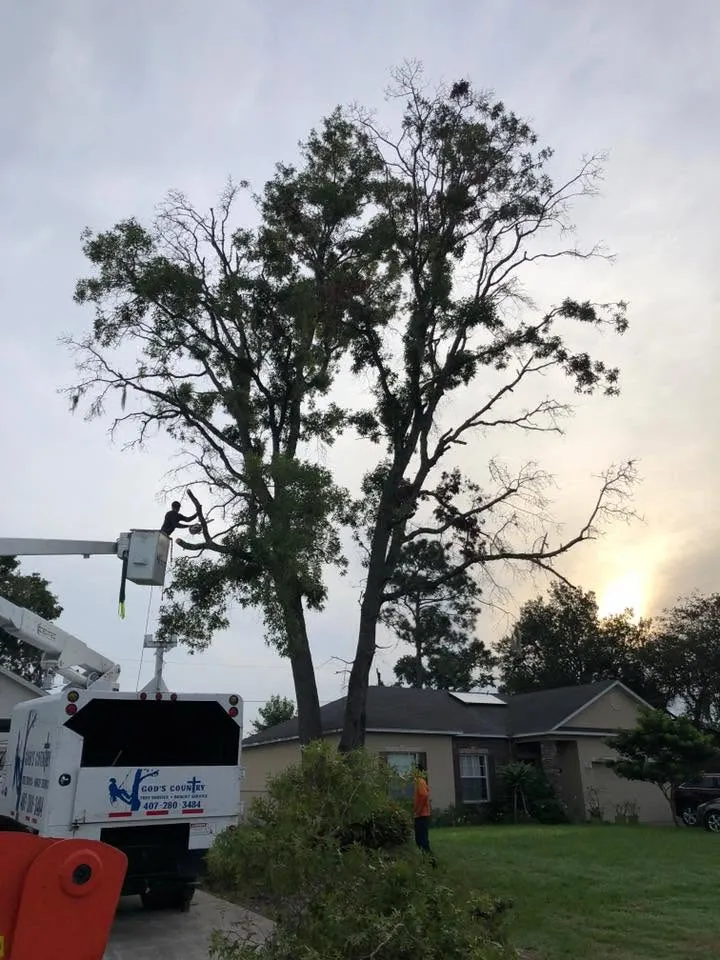
On a healthy oak, the wood itself is part of the safety system: it hinges, it holds rigging points, it behaves. On the dead pines and declining live oaks we're called to in DeLand, Deltona, Orange City, and DeBary, none of that can be assumed. So the crew sounds the trunk, tests every tie-in, and moves the load onto the boom lift and grapple loader whenever the tree can't be trusted to carry it.
Machines carry the risk. When a trunk is too far gone to climb, our boom lift and compact grapple loader do the reaching and the lifting — the same one-crew tree-and-land-clearing setup, no subcontractors.
Certified arborist judgment. Declining isn't always dead. If a scratch test and a look at the crown say the tree can be saved with pruning or care, that's the answer you get at the estimate.
Insurance you can verify. Licensed and insured, with proof available before a saw starts — exactly the paperwork that matters most when the job is the risky kind.
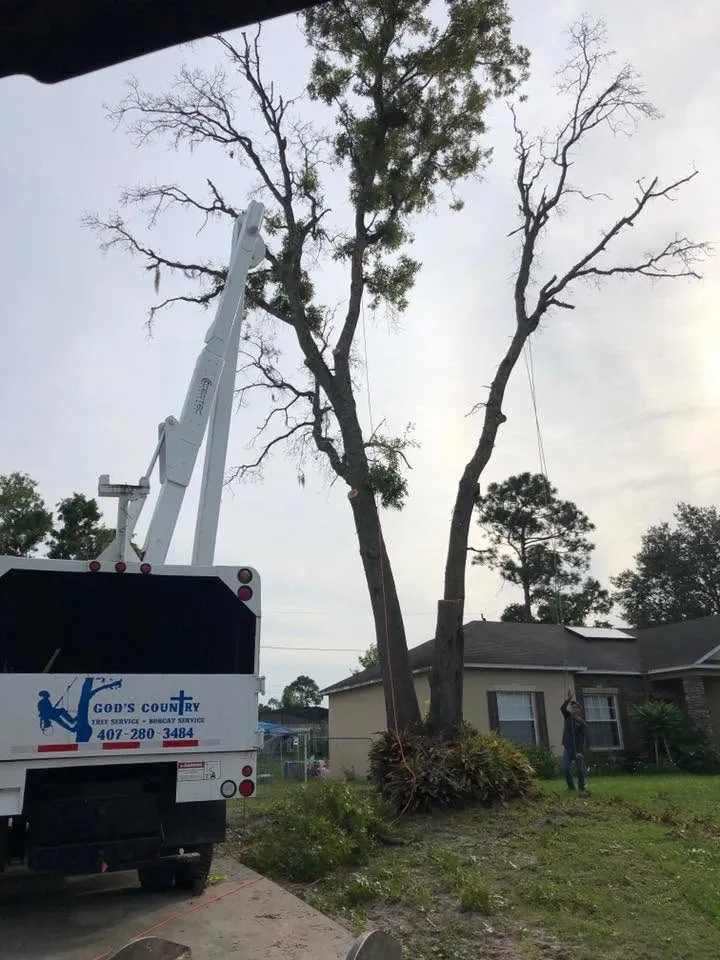
Every hazardous removal we quote in DeLand includes the risk assessment, a written 24-hour estimate, roped or lift-assisted dismantling, chipping, and same-day debris hauling on most jobs. Photo documentation of the tree's condition comes standard, and stump grinding is quoted up front — never sprung on you after.
We look at the whole failure picture — decay, lean, targets, escape routes — and tell you plainly whether yours is a remove-now, a watch-it, or a tree worth saving.
One all-in number in writing: takedown, chipping, hauling, and the stump option itemized before anyone starts a saw. No driveway guesswork, no add-ons after.
Dead wood never gets climbed on faith. Boom lift positions, ropes, and lowering points are planned around what the trunk can actually still hold.
Sections come down roped and lowered over roofs, fences, and pool screen enclosures — never free-dropped over a target, no matter how far gone the tree is.
Brush is chipped and debris hauled the same day on most jobs. Stump grinding is quoted up front with the removal if you want every trace of the hazard gone.
Condition photos and the written scope go in your file — the documentation DeLand homeowners and HOAs keep on hand for insurance and property records.
Hazardous tree removal in DeLand usually costs more than removing a comparable healthy tree, because decay forces slower rigging and heavier equipment. Small dead trees in open yards run a few hundred dollars; large brittle oaks or pines over structures cost considerably more. You get a free written, all-in estimate within 24 hours.
Brittle, decayed wood forces slower rigging and more lift work. A tree that died two years ago costs more to remove than the same tree taken down the season it declined.
Open lawn — or a roofline, pool screen enclosure, and fence? Every section rigged over a target adds crew time, and that's where most of the price lives.
An 80-foot slash pine spar and a hollow multi-trunk live oak fail differently and get dismantled differently. Height, spread, and wood weight drive the hours.
Gate width decides which machines fit. Our compact grapple loader works most DeLand backyards; true hand-carry jobs take longer and the quote says so honestly.
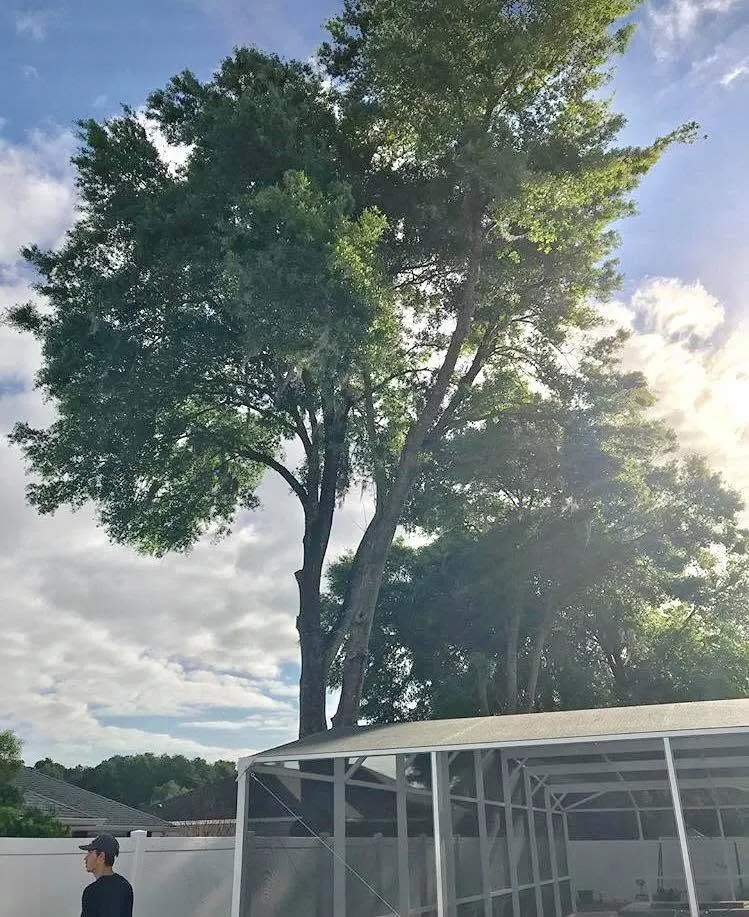
If you're typing dead tree removal near me in DeLand, this is what the work looks like nearby: a declining oak dismantled from a bucket at first light, and a tall leaner assessed over a pool screen enclosure before a rope ever goes up. We work within about 50 miles of DeLand — this crew answers your call.
Remove it now. A dead tree never gets safer — Central Florida sun, rain, and beetles make it more brittle every month, and hurricane season sets the deadline. Removal on your schedule happens at standard rates in good weather; removal after it fails means emergency pricing, and possibly a roof.
Mostly urgency, insurance, permits, and whether the tree is really dead. Straight answers below, from a crew that has been making the save-or-remove call across Volusia County since 2014. If your question isn't here, send it through the estimate form and you'll hear back within 24 hours.
It depends on what it can hit. A dead tree standing over the house, driveway, pool enclosure, or a service drop deserves fast scheduling — treat it as urgent. One standing in an open corner of the lot can usually wait for a normal appointment. Either way the assessment is free, and we'll tell you honestly which category yours falls into.
Possibly. DeLand and Volusia County protect certain trees, though dead and hazardous trees are handled differently from healthy ones. Requirements turn on species, size, and where the tree stands on the lot, so we flag permit questions during your free estimate — before any cutting is scheduled — so you know exactly what applies to your property.
Usually not — carriers treat standing-tree removal as maintenance and generally cover damage only after a fall onto a covered structure. Some claims also get complicated when the tree was a known, documented hazard left standing. We can't speak for your carrier, but we provide the condition photos and written estimate adjusters typically ask about.
Start with a conversation, and get the condition on record. We can assess the tree, photograph it, and put what we see in writing so you have something concrete to share with your neighbor or HOA. If the removal is approved, we can often stage the work from whichever side gives the crew the safest access.
Sometimes. Drought-stressed oaks drop leaves and recover, and several Florida species simply leaf out late. That's exactly why the estimate includes certified arborist judgment — a scratch test, a look at buds and cambium, and an honest answer. When pruning or care can save the tree instead of removing it, we say so.
Slash pines lose structural strength quickly after they die — beetle-killed pines can become too brittle to climb within months, which forces more equipment and cost. Dead oaks decay more slowly but hollow out unpredictably. Either way, sooner is cheaper: the longer a dead tree stands in Central Florida weather, the harder it is to remove safely.
Estimates go out within 24 hours, and genuinely dangerous trees jump the schedule. Most single-tree hazardous removals around DeLand are finished in a day, cleanup included. If the tree has already failed or is touching a structure, use our 24/7 emergency tree service instead — that work gets a same-day response.
Three services pair naturally with a hazardous removal: standard tree removal for healthy trees coming down in the same visit, emergency response for the dead tree that stopped waiting, and certified arborist assessments for the borderline trees you're not sure about. One DeLand crew, one written estimate, all of it.
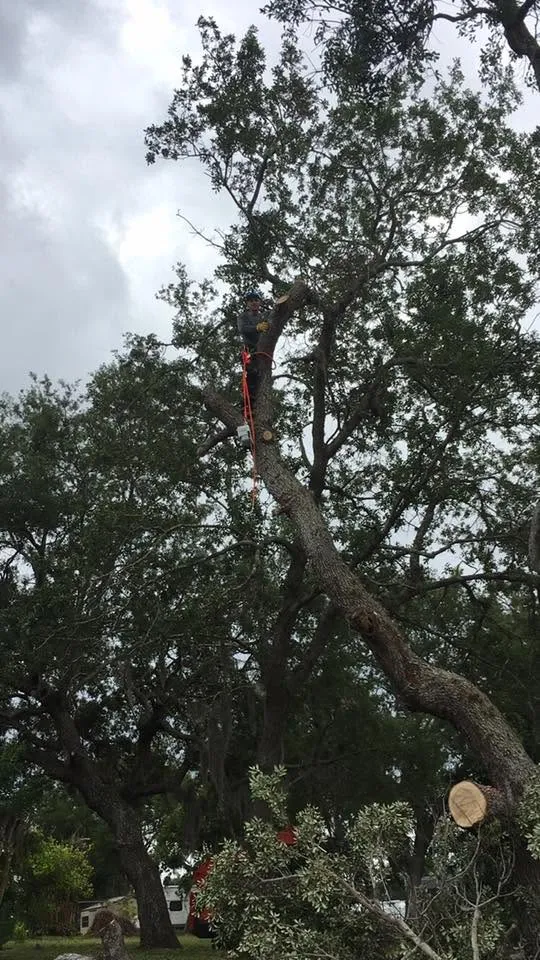
Safe, controlled removal for trees of all sizes.
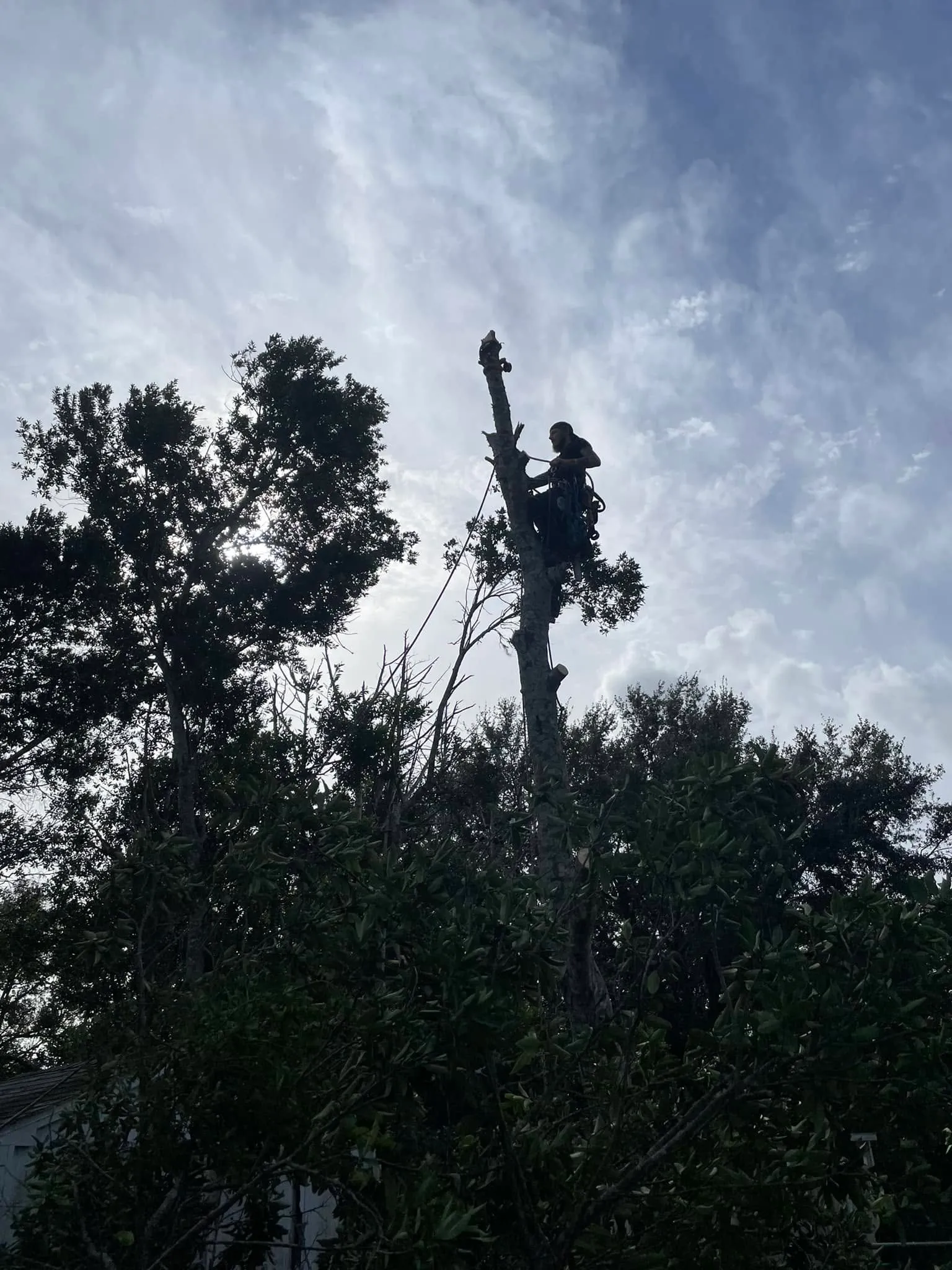
24-hour response for storm damage and urgent hazards.
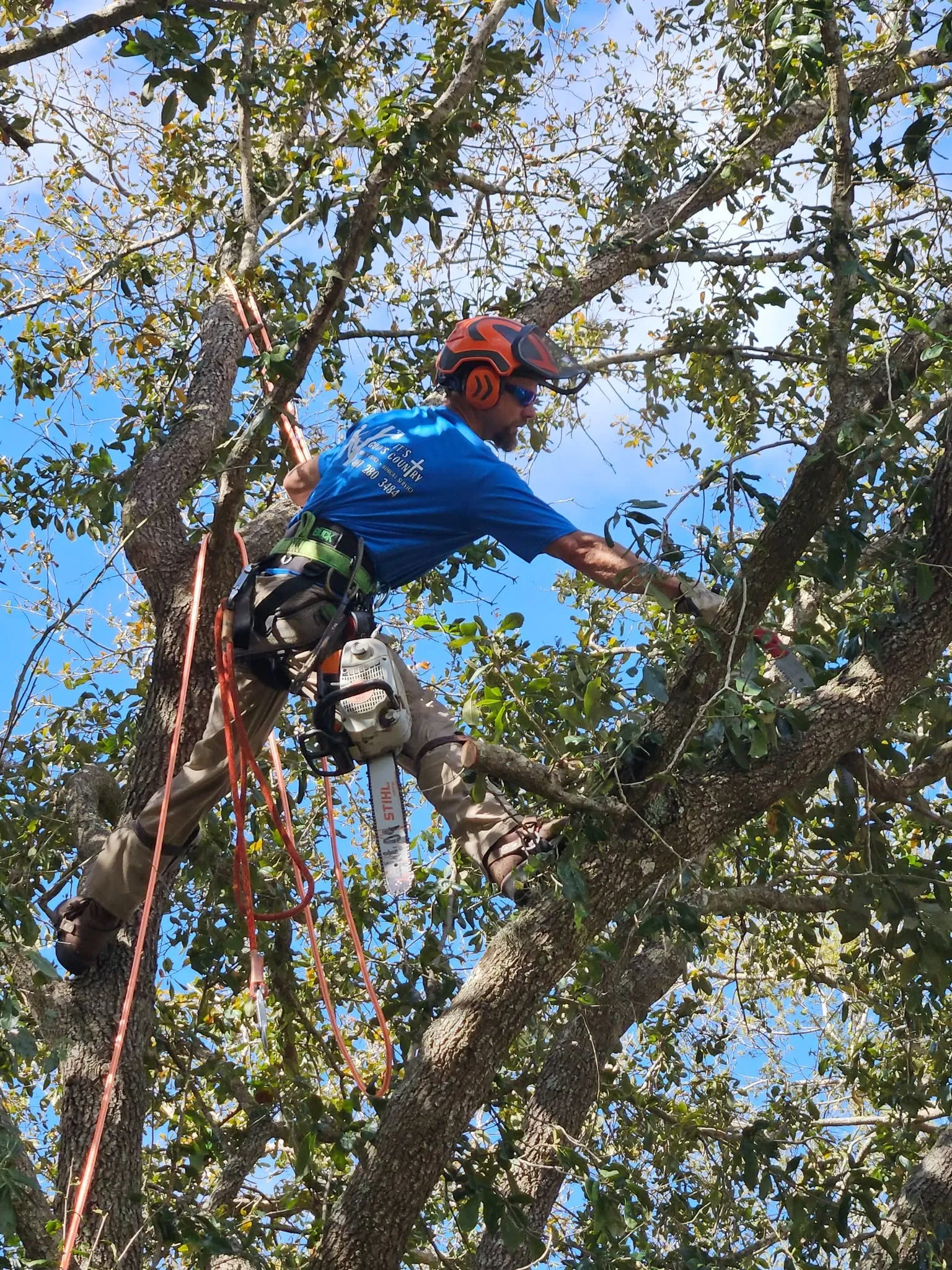
Expert diagnosis and treatment plans from certified tree professionals.
Send a photo or a description through the estimate form and God's Country Tree Service LLC will look at the tree, tell you honestly whether it's a hazard, and put a written, all-in price on removing it — usually within 24 hours, and always before storm season beats you to it.
Last Updated: July 2026